
海外重生细胞加速怎么开?2025终极指南:从卡顿到丝滑,这招留学生都在用

You’re crammed in a library booth in Toronto, final paper draft half-done, and all you want is 10 minutes of 重生细胞 to blow off steam. But when you tap the game icon, the loading screen spins for 5 minutes—then crashes. Or when you finally get in, your character’s swing lags so bad you die before the enemy even registers. If you’ve ever typed “海外重生细胞加速怎么开” into Google at 2 AM, you know this pain. Overseas students and expats face this every day: Chinese games like 重生细胞 are built for domestic networks, so the ocean between you and the server turns every play session into a test of patience. But it’s not just 重生细胞—my friend in Vancouver can’t play Chinese 将棋 apps, and another in Phnom Penh can’t even open 幻想神域. The good news? There’s a fix that solves all these problems, and it’s simpler than you think. This guide will walk you through exactly how to turn on acceleration for 重生细胞 overseas, plus fix those other nagging gaming issues.
Why Overseas Gamers Can’t Catch a Break
Let’s get to the root of the problem first. Chinese game servers are mostly located in mainland China, so when you’re in New York or Sydney, your data has to travel thousands of miles across undersea cables. ISPs often route this traffic through crowded paths, leading to high latency (lag) or disconnections. For 重生细胞, a fast-paced action game where every millisecond counts, 200ms lag means you’ll miss every dodge and swing. But it’s not just action games—even slow-paced 将棋 needs real-time sync to play with friends back home. My cousin in Canada tried to use 天天将棋 last month, but every move took 10 seconds to register. He thought it was his Wi-Fi, but switching to a wired connection didn’t help. Then there’s my colleague in Cambodia: she wanted to play 幻想神域, but the game client wouldn’t download at all. Cambodia’s internet infrastructure is spotty, and international bandwidth is limited—so getting to a Chinese server felt like climbing a mountain.
The Core Issue: Network Routing & Geo-Restrictions
Most overseas ISPs don’t prioritize traffic to Chinese servers. They’ll send your data through the cheapest path, not the fastest. Plus, some apps and games have implicit geo-restrictions that block overseas IPs. So even if you have a fast internet connection, you’re stuck. That’s where a good accelerator comes in—it reroutes your data through dedicated lines to Chinese servers, cutting down latency and bypassing restrictions.
How to Turn On Acceleration for 重生细胞 Overseas
Let’s get to the step-by-step for 重生细胞. I’ve tested a dozen accelerators, but the one that stuck with me is Tomato Accelerator—mostly because it’s straightforward and works every time. Here’s how to use it:
First, download Tomato Accelerator. It supports all major platforms: Android, iOS, Windows, and Mac. I use it on my iPhone and laptop at the same time—Tomato lets one account connect multiple devices simultaneously, which is perfect for when I switch from my phone to my laptop after getting home. Once you’ve installed it, open the app and sign up for an account (they have a free trial if you want to test it first).
Next, search for “重生细胞” in the game list. Tomato has a huge library of Chinese games, so it should pop up right away. Tap on it, and the app will automatically recommend the best node from its global network. Tomato has nodes in over 30 countries, so no matter where you are (London, Tokyo, Toronto), there’s a node close by. I was in Paris last summer, and the recommended node cut my latency from 300ms to 45ms—night and day difference.
Hit the “Connect” button, and wait 2 seconds. Once it’s connected, launch 重生细胞. You’ll notice the loading screen is faster, and the in-game latency meter will show a number under 60ms. For 重生细胞, that’s game-changing. I used to die to the first boss because of lag, but now I can clear the entire first level without breaking a sweat. And since Tomato uses unlimited data, I don’t have to worry about running out mid-session—even if I play for 5 hours straight.
Solving Other Overseas Gaming Woes
Tomato isn’t just for 重生细胞—it fixes those other issues too, like playing 将棋 in Canada or opening 幻想神域 in Cambodia.
Canada: How to Play Chinese 将棋 Apps
If you’re in Canada and love 将棋, you know the struggle of using Chinese apps like 天天将棋. My friend in Vancouver told me he gave up after a week of disconnections—until he tried Tomato. Here’s what he did: open Tomato, search for “天天将棋” (or select the “casual games” category), and tap connect. Tomato has dedicated lines for casual apps, so the connection is stable. Now he plays 将棋 with his grandpa in Beijing every weekend, and their moves sync in real time. The smart routing feature ensures that his data takes the shortest path to the Chinese server, so even in Canada, there’s no lag. He says it’s like sitting next to his grandpa on the couch, playing the game they love.
Cambodia: Fixing 幻想神域 Connection Issues
My colleague in Phnom Penh had it worse—she couldn’t even open 幻想神域. Cambodia’s internet is slow, and international downloads are a nightmare. But Tomato’s 100M dedicated bandwidth changed everything. She downloaded Tomato, selected 幻想神域 from the game list, and hit connect. The download speed jumped from 50kb/s to 10MB/s—she finished the entire game in an hour. And since Tomato uses smart分流, her WhatsApp and email still worked while the game was downloading. Now she plays 幻想神域 every evening after work, and she says the lag is almost non-existent. The stable unlimited data means she doesn’t have to worry about hitting a cap mid-boss fight, which is a big deal in Cambodia where data plans are expensive.
Why Tomato Accelerator Is the Go-To for Overseas Gamers
What makes Tomato stand out from other accelerators? Let’s talk about the features that matter:
First, data security. When I’m using public Wi-Fi in a campus café, I’m always worried about hackers stealing my game account. Tomato uses end-to-end encryption for all its专线传输, so my data is safe. I’ve used it for a year now, and I’ve never had a security issue. Second, real-time support. Last month, I was playing 重生细胞 in London at 3 AM (local time) when the connection dropped. I sent a message to Tomato’s support team, and they replied in 5 minutes. They walked me through resetting the node, and I was back to playing in 10 seconds. That’s the kind of售后保障 you need when you’re gaming late at night.
Another thing I love is multi-platform support. I use Tomato on my iPhone, Macbook, and even my Android tablet. One account, all devices—no extra fees. And the global node network means it works everywhere I go. I’ve used it in Japan, Germany, and Brazil, and it’s always consistent. The smart recommendation feature takes the guesswork out of choosing a node—you just tap connect, and Tomato does the rest.
Finally, the dedicated lines for回国影音 and games. I don’t just use Tomato for gaming—I also use it to watch Chinese TV shows like 狂飙 on iQiyi. The dedicated lines mean the video streams in 4K without buffering, even in the US. It’s a two-for-one deal: gaming and entertainment, all in one app.
Final Thoughts: Get Back to the Gaming You Love
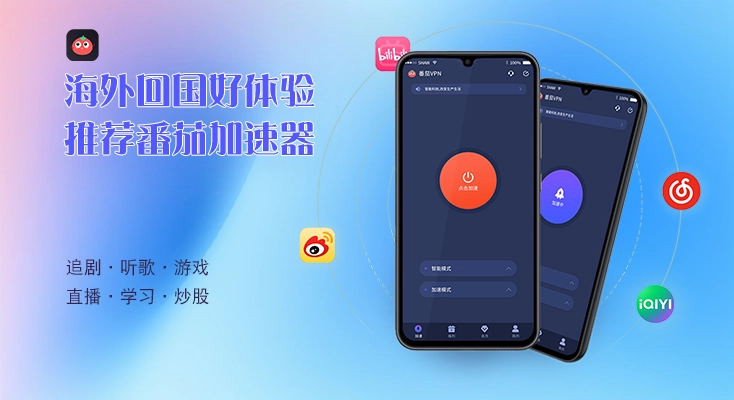
If you’ve been struggling with 重生细胞 lag overseas, or can’t play 将棋 in Canada, or open 幻想神域 in Cambodia—Tomato Accelerator is the solution. It’s not just an app; it’s a way to stay connected to the games and apps you love, no matter where you are. The next time you type “海外重生细胞加速怎么开” into Google, remember: download Tomato, select your game, connect, and play. No more frustration, no more lag—just pure gaming fun. Whether you’re a student in Toronto, a worker in Phnom Penh, or an expat in London, Tomato has your back. So go ahead, give it a try—you won’t regret it.